

The Difference That Changes Everything
At Plant With Purpose, we’ve seen again and again that the way we give matters just as much as what we give. Two approaches may look similar from the outside. Sharing seedlings, offering training, or providing materials. Beneath the surface, however, they shape communities in very different ways.
A handout is something given.
A co-investment is something built together.
For families facing rural poverty and environmental degradation, the difference can determine whether change lasts for a season… or for generations.
Handouts often meet immediate needs, and there are moments when urgent relief is absolutely necessary. But when used as a long-term strategy, handouts can unintentionally undermine the very dignity and agency we hope to restore.

How Handouts Affect Communities
- They shift ownership away from local people.
- They can reinforce the belief that solutions come from outside.
- They fade when the project ends because nothing new was built from within.
Families may receive a tool or resource, but they aren’t invited into a process that strengthens their knowledge, resilience, or confidence. Over time, this can create dependency rather than empowerment.
Co-Investment: Partners Not Projects
Co-investment begins with a simple but transformative idea: Both partners bring something essential.
Plant With Purpose offers training, seedlings, resources, and technical support.
Farmers bring local knowledge, labor, time, land, and commitment.
This shared investment leads to shared ownership—and shared pride. Instead of seeing a project as “Plant With Purpose’s work”, farmers see it as their own. That shift changes everything.

Why Co-Investments Last
- They build new skills and confidence.
- They strengthen relationships and trust.
- They continue long after our staff leave a village.
- They grow resilience: economic, spiritual, and environmental.
When community members co-creates change, it protects, adapts, and multiplies their resources.
Spot the Difference
Many activities—seedling distribution, erosion control structures, savings group supplies—can look like handouts from the outside. The real distinction lies in ownership and participation.
Here are a few questions we ask ourselves:
- Who owns the process in 3–5 years?
- What has the community already contributed?
- Would this community continue even if outside support stopped?
- Is new knowledge being built?
- Can the practice be replicated locally without us?
- Is responsibility shared?
If a project strengthens local capacity, builds shared responsibility, and empowers long-term stewardship, it’s a co-investment.

Trees: A Clear Picture of Co-Investment
Plant With Purpose typically provides seedlings, which cost a dollar each (varies by country). Yet the farmer invests so much more: land preparation, watering, pruning, protection from goats, composting, and years of steady attention.
A Tree’s True Cost
- Plant With Purpose’s contribution: about $0.60–$1.00
- Farmer’s contribution: approximately $5.50 in labor, materials, and opportunity cost
Farmers invest over 85% of the true cost of a tree. Their work is the engine of transformation. They’re why tree survival rates rise. They’re why landscapes change. And they are why dignity grows alongside the forests.
Seedlings aren’t given out freely. Farmers demonstrate readiness through participation in training, soil conservation work, and evidence that they can care for the trees well. Distribution becomes a recognition of responsibility, not a handout.
And because farmers see themselves as the main actors, the forest becomes something deeply personal. Forests are something they protect, expand, and pass on.
A tree is more than a sapling.
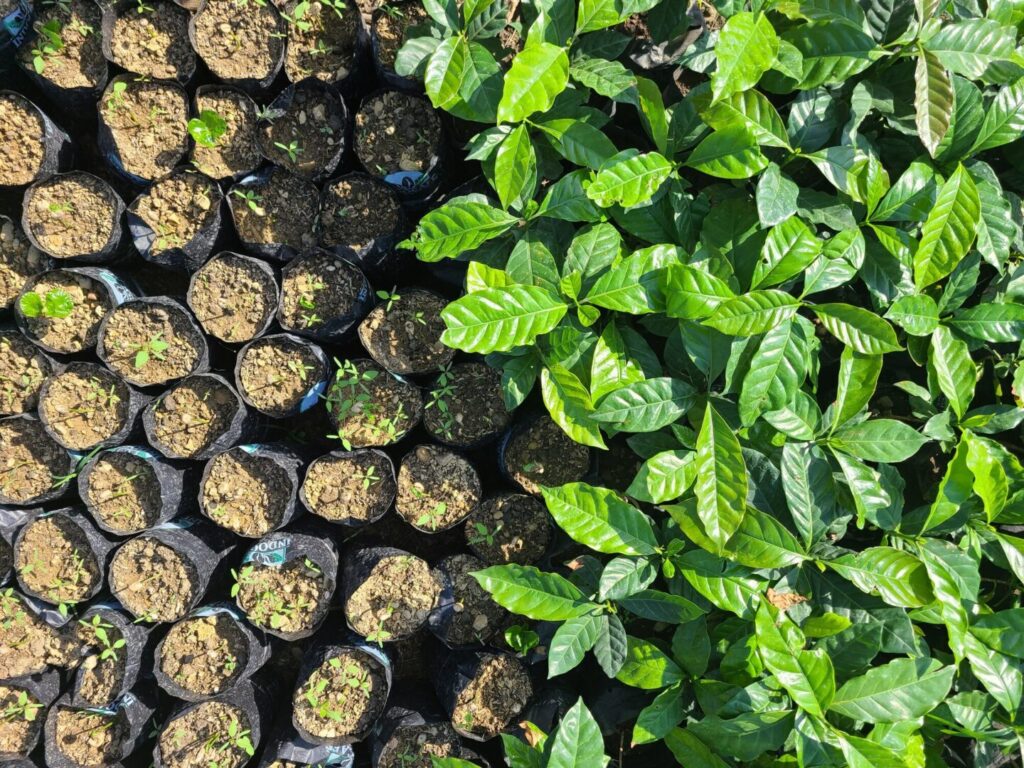
It is food, shade, soil protection, habitat, water retention, and beauty.
For many farming families, something even deeper happens: the tree becomes part of their spiritual life—a sign of God’s provision and a reminder of their call to steward creation.
As Victor Hugo wrote, “The beautiful is as useful as the useful. Perhaps more so.”
When farmers begin to see the forest not only as something to use, but as something to belong to, their relationship with the land transforms. Care becomes reverence. Stewardship becomes joy.
One farmer in the Dominican Republic put it beautifully:
“Once my cacao farm was established, I began to hear birds singing.
I hadn’t noticed them before… Now I don’t feel alone anymore.”
This is where ecological restoration becomes spiritual renewal—a sense of rootedness in God’s creation.
Another Example: Water Tanks in Oaxaca
In southern Mexico, our 25,000-liter water tanks follow the same shared-effort model.
- Plant With Purpose provides: cement, rebar, and fittings. These are materials communities can’t easily access.
- Communities provide: labor, sand, water, and construction skills.

Tanks last up to 30 years. Families learn skills to build future systems on their own. Women and children gain access to dry-season water for gardens. Nutrition, income, and dignity all increase and communities own the system fully.
The tank is not a gift; it is a partnership. Because everyone contributes, everyone benefits.
From reforestation to regenerative agriculture to spiritual growth, nearly everything we do at Plant With Purpose could be mistaken for a handout at first glance. Yet the heart of our work is partnership.
Handouts may relieve, but co-investments restore.
They build dignity, ownership, and long-term resilience—exactly what rural families need to overcome poverty and heal their land.
True development isn’t something we deliver.
It’s something we grow together.


